

How to Prepare Your Condo Association for a 40-Year Inspection
If your condominium building in Fort Lauderdale, Florida (or anywhere in Broward County) is approaching its 40th anniversary, a 40-Year Recertification Inspection is not optional—it is a mandatory city requirement. For condo associations, boards, and property managers, understanding the process early is critical to avoiding fines, delays, and unexpected repair costs.
This guide explains what the 40-Year Inspection is, why it exists, what Fort Lauderdale inspectors look for, and how condo associations can prepare properly while staying compliant and search-engine visible.
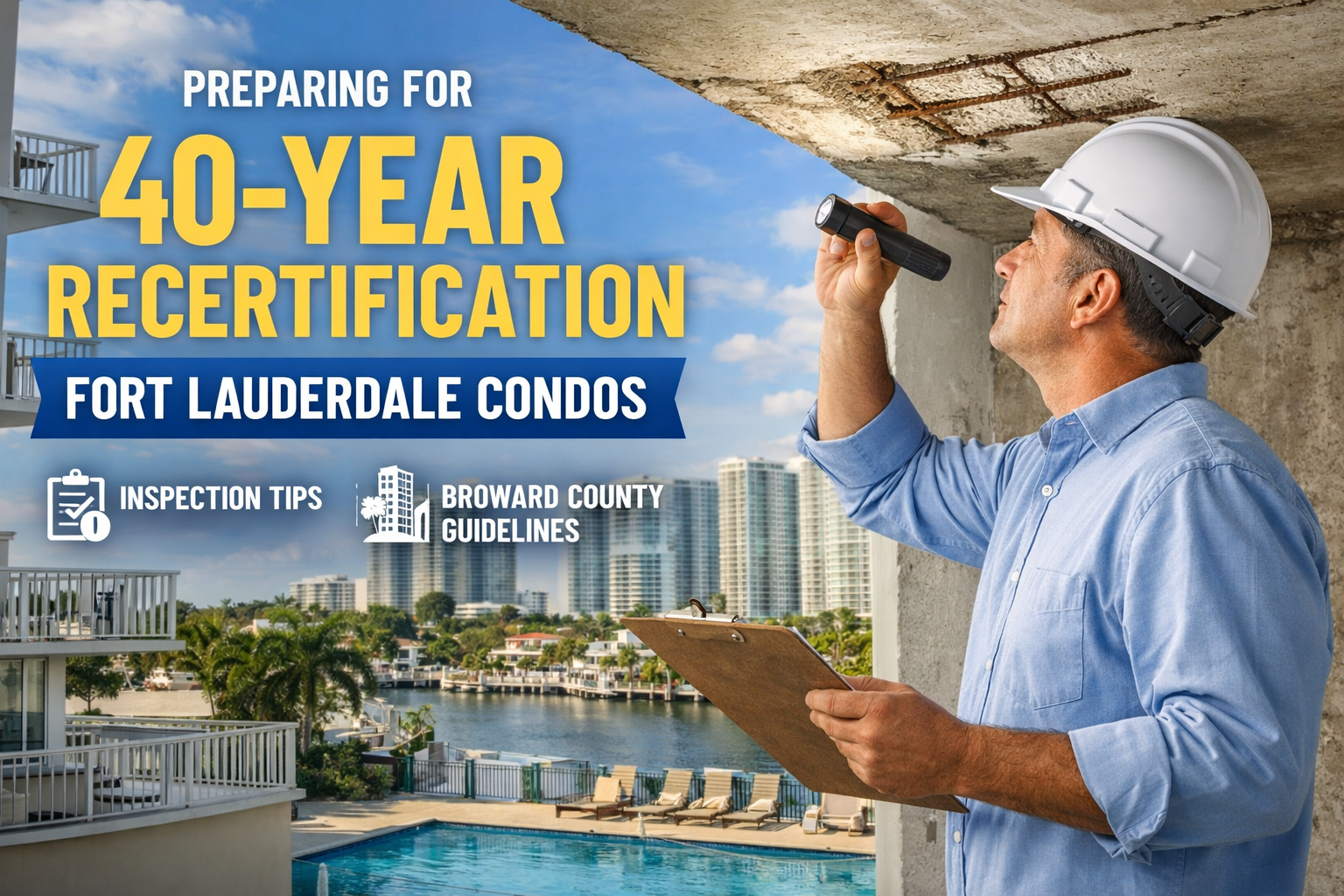
What Is a 40-Year Recertification Inspection?
The 40-Year Recertification is a safety inspection program enforced by the City of Fort Lauderdale Building Department and Broward County. It applies to buildings that are 40 years old or older, based on the original Certificate of Occupancy.
The inspection evaluates whether an aging building remains:
Structurally safe
Electrically compliant
Suitable for continued occupancy
Once a building completes its first 40-Year Recertification, it must typically undergo recertification every 10 years thereafter (50-year, 60-year, etc.).
Why the 40-Year Inspection Is Strictly Enforced in Fort Lauderdale
South Florida buildings face unique environmental conditions that accelerate deterioration, including:
Salt air corrosion (especially near the coast)
High humidity and moisture intrusion
Frequent storms and hurricanes
Aging concrete and reinforcing steel
Following recent building safety reforms, enforcement of 40-Year Inspections in Fort Lauderdale has become significantly more rigorous. Cities now require detailed documentation, professional engineering reports, and timely completion of all corrective repairs.
Which Buildings Must Comply?
In Fort Lauderdale and Broward County, the 40-Year Inspection generally applies to:
Condominium buildings
Commercial buildings
Multi-story residential buildings
Single-family homes are typically exempt, but condo associations and HOAs are always subject to recertification requirements.
Step 1: Confirm Your 40-Year Recertification Deadline
Condo boards should determine:
The building’s original Certificate of Occupancy date
The official recertification notice issued by the city
Failing to meet the deadline may result in:
Daily fines
Code enforcement actions
Red-tagged units or common areas
Insurance and financing complications
Best practice: Begin planning 12–18 months before your due date.
Step 2: Hire Fort Lauderdale–Experienced Inspectors
The 40-Year Inspection must be completed by licensed professionals, typically including:
A Florida-licensed Structural Engineer or Architect
A licensed Electrical Contractor or Electrical Engineer
Hiring professionals familiar with Fort Lauderdale recertification requirements is essential. Local inspectors understand city expectations, common failure points, and documentation standards that out-of-area firms often miss.
Step 3: Understand What Inspectors Look For
Structural Inspection Focus Areas
Structural engineers typically evaluate:
Concrete spalling and cracking
Exposed or corroded rebar
Balconies, railings, and stairwells
Load-bearing walls and columns
Roof systems and waterproofing
Signs of settlement or structural movement
Electrical Inspection Focus Areas
Electrical inspections commonly review:
Main electrical panels (including Federal Pacific and Zinsco panels)
Grounding and bonding
Wiring conditions in common areas
Electrical rooms and service equipment
Code compliance with current safety standards
Step 4: Gather Documentation Early
Well-prepared condo associations organize:
Original building plans (if available)
Previous recertification reports
Concrete restoration records
Roof replacement documentation
Electrical upgrade invoices
Maintenance and repair logs
Providing documentation can help reduce inspection scope and support compliance decisions.
Step 5: Conduct a Pre-Inspection Assessment
A pre-inspection walkthrough helps identify issues before the official city inspection. Common early red flags include:
Water intrusion
Rust staining on concrete
Deteriorated balconies
Aging electrical panels
Addressing these items early often prevents delays during the city review process.
Step 6: Communicate With Unit Owners
Clear communication is critical. Condo associations should notify owners about:
Inspection schedules
Unit access requirements
Temporary disruptions
Potential special assessments
Transparent communication reduces resistance and improves cooperation.
Step 7: Budget for Required Repairs
Most older buildings require some corrective work to achieve recertification approval. Common repair categories include:
Concrete restoration
Electrical system upgrades
Waterproofing and roof repairs
Associations should plan contingency funds and avoid waiting until violations are issued.
Step 8: Submit Reports and Address City Comments
After inspections:
Reports are submitted by the condo owner to the City of Fort Lauderdale Building Department
The city issues comments or violations if applicable
Required repairs are completed and re-inspected
Recertification is granted only after all deficiencies are resolved.
Common 40-Year Recertification Mistakes
Waiting until the deadline year
Hiring inspectors unfamiliar with Fort Lauderdale codes
Underestimating repair timelines and costs
Poor communication with residents
Ignoring visible structural warning signs
Final Thoughts
The 40-Year Recertification Inspection is one of the most important compliance milestones a condo association will face. With early preparation, qualified local professionals, and proactive maintenance, Fort Lauderdale condo boards can navigate the process confidently and avoid costly surprises.
If your building is approaching 40 years in Fort Lauderdale or Broward County, now is the time to start planning—not reacting.
Contact us at Florida Builders, Engineers & inspectors for your next 40 Year Recertification Inspection.